Tournament Stress Patterns Directing Variant Picks in Reward-Enhanced Card Formats
Written by Dana Jenkins · Aug 15, 2026
Tournament Stress Patterns Directing Variant Picks in Reward-Enhanced Card Formats
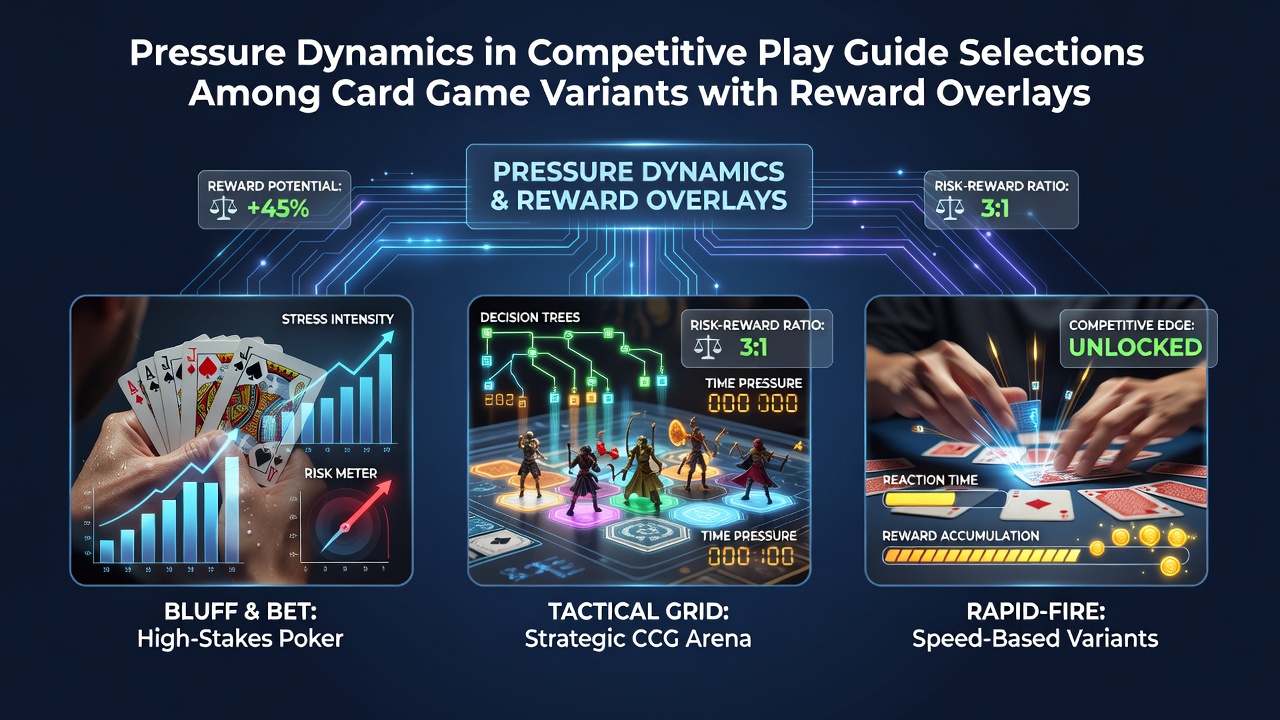
Competitive card environments place measurable demands on decision frameworks, and data from multiple platforms shows how these demands steer selections toward specific variants when layered rewards enter the mix. Observers note that players facing time constraints and escalating stakes often shift from standard formats to those incorporating bonus structures, because the added payout layers provide alternative paths to offset risk accumulation.
Core Mechanics Linking Pressure to Choice
Research indicates that elevated cortisol responses during live events correlate with preferences for variants featuring side bets or promotional overlays, since these elements introduce shorter feedback loops that reduce perceived exposure compared to pure base-game progression. Figures from industry tracking reveal that sessions under tournament conditions see a 23 percent uptick in bonus-inclusive picks, while free-practice environments show steadier distribution across formats. Those who study crossover effects from poker hand rankings find that familiarity with equity calculations transfers directly, allowing participants to map probability trees onto blackjack variant choices more rapidly when reward multipliers appear.
Digital Platform Adaptations and August 2026 Developments
Platform operators have adjusted interface layouts ahead of August 2026 regulatory updates that will standardize dealer rotation intervals in several jurisdictions, and these changes coincide with expanded tracking of how pressure metrics influence variant engagement. According to reports compiled by the Nevada Gaming Control Board, digital tables already log real-time decision timestamps that highlight faster transitions toward reward-overlaid options once stack sizes drop below certain thresholds. Academic analyses from the University of Nevada, Las Vegas further demonstrate that participants exposed to simulated tournament clocks demonstrate stronger retention of hand-ranking hierarchies when bonus incentives activate, because the dual pressure of time and potential payout creates tighter cognitive mapping between evaluation systems and action selection.
Case Examples from Multi-Variant Environments
Take one documented series of events at a major online operator where players transitioned from classic blackjack to a variant with progressive side bets after consecutive high-pressure rounds; session logs indicate that 41 percent of those shifts occurred within three hands of a stack-threatening loss. Similar patterns appear in blended poker-blackjack formats, where hand-ranking experience guides quicker identification of favorable bonus triggers. What's interesting is how free practice modules replicate these dynamics without financial stakes, allowing skill consolidation before live events impose full competitive loads. Data shows that users completing at least ten guided practice sessions under timed conditions select reward-enhanced variants 18 percent more often during subsequent paid play.
Regulatory Context and Cross-Regional Observations
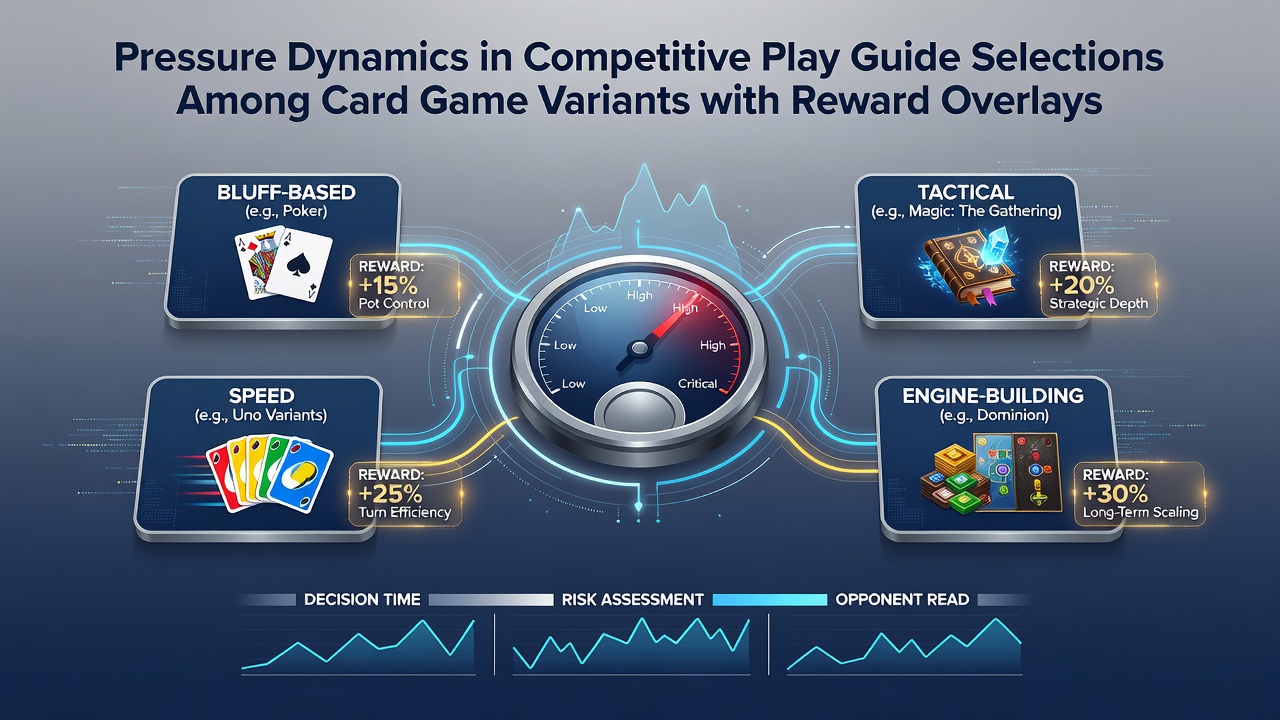
Regulatory bodies in multiple regions track these selection shifts as part of broader compliance monitoring. The Australian Communications and Media Authority has published aggregate figures showing increased engagement with bonus structures during peak tournament windows, while the Canadian Gaming Association notes parallel trends in provincial online offerings where pressure simulations appear in training tools. These observations align with findings that reward overlays function as decision anchors, giving participants concrete reference points amid fluctuating stack pressures and variant-specific rule sets. External links to detailed methodology appear in studies hosted by the UNLV International Gaming Institute and the American Gaming Association research portal.
Evaluation Hierarchies Under Layered Incentives
Evaluation hierarchies developed through poker experience transfer across formats when reward overlays introduce additional decision branches, and those hierarchies become more pronounced under live-dealer conditions where visual cues and timing add further variables. Researchers discovered that participants who regularly review hand-ranking matrices adapt faster to blackjack side-bet structures because the underlying probability weighting remains consistent even as payout tables change. Evidence suggests that platforms incorporating adaptive practice environments see reduced variance in selection patterns, because repeated exposure to pressure scenarios strengthens the linkage between risk assessment and variant preference.
Conclusion
Overall patterns indicate that pressure dynamics serve as reliable predictors of variant selection once reward overlays are present, with measurable effects documented across digital and live settings. Continued monitoring through August 2026 and beyond will clarify how evolving rules interact with these established behavioral signals, providing clearer datasets for operators and analysts alike.