Tournament Dynamics Reveal How Poker Hand Rankings Guide Risk Choices in Blackjack Variants with Bonus Incentives
Written by Dana Jenkins · May 27, 2026
Tournament Dynamics Reveal How Poker Hand Rankings Guide Risk Choices in Blackjack Variants with Bonus Incentives
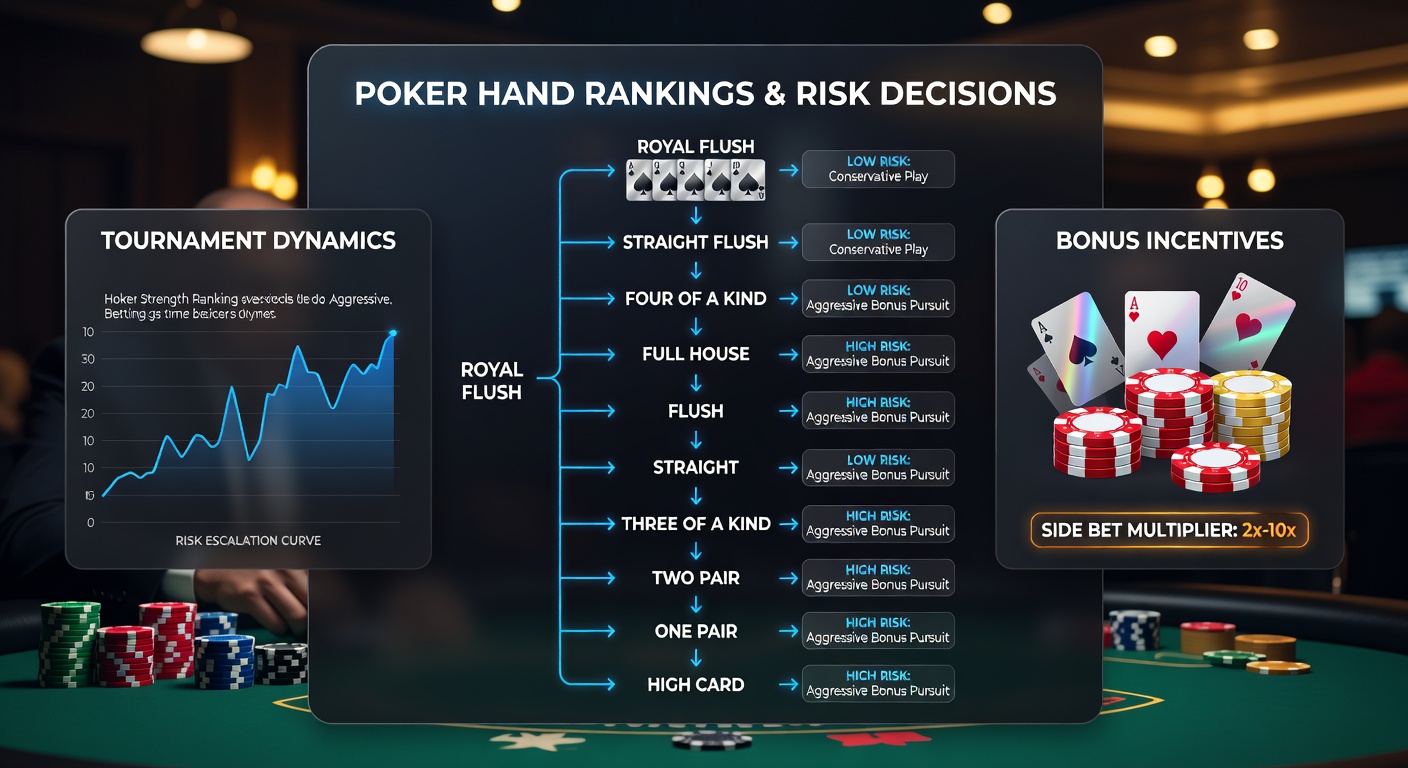
Players in competitive settings draw on poker hand rankings when they assess risk levels during blackjack variants that incorporate bonus incentives, and this crossover shapes decisions around doubling, splitting, and side bet selections under tournament pressure. Standard poker hierarchy places royal flushes and straight flushes at the top while pairs and high cards occupy lower tiers, yet these same valuations translate into calculated choices when blackjack rules expand to include bonus rounds or progressive jackpots that reward specific combinations.
Poker Rankings as Decision Frameworks
Observers note that participants familiar with poker often apply relative strength assessments to blackjack scenarios where bonus structures mirror poker payouts, such as three-of-a-kind bonuses or straight bonuses in variants like Blackjack Switch. Data from multi-state gaming reports indicate that players who internalize poker rankings adjust their hit-or-stand thresholds more conservatively when a bonus payout tier aligns with a strong poker hand equivalent, and this pattern emerges consistently in both live and digital tournament formats. Researchers at institutions tracking player behavior have documented how knowledge of flush and straight probabilities influences willingness to accept higher-risk splits when bonus multipliers exceed standard blackjack returns.
Tournament Pressure and Risk Calibration
Tournament structures introduce stack preservation concerns that amplify the role of poker-derived risk evaluation, because elimination looms larger than in cash games. When bonus incentives scale with remaining chips or round advancement, participants weigh the implied odds of completing a poker-like sequence against the immediate blackjack outcome. Studies compiled by the Nevada Gaming Control Board show measurable shifts in doubling frequency during late-stage rounds, where players holding borderline hands become more selective if a bonus layer rewards flush-equivalent totals. The interaction creates layered calculations: a player might decline insurance in standard blackjack yet accept an equivalent side wager when the bonus pool connects to a straight or three-of-a-kind threshold already familiar from poker experience.
What's interesting is how these patterns hold across different regulatory environments. Canadian provincial data collected through the Alcohol and Gaming Commission of Ontario reveals similar adjustments among frequent tournament entrants who carry poker backgrounds into blackjack variant events. Bonus incentives tied to consecutive hand achievements further encourage participants to track running counts not only for basic strategy deviations but also for alignment with poker hand completion rates.
Bonus Structures That Bridge the Two Games

Variants that layer bonus incentives onto core blackjack rules create explicit bridges to poker thinking. Games offering progressive bonuses for suited totals or paired cards prompt players to evaluate hands through a dual lens: immediate dealer confrontation versus longer-term bonus qualification. According to industry analyses from the Australian Gambling Research Centre, participants who rank hands using poker standards increase their participation rate in side bets when those bets carry payout structures that echo poker odds tables. This occurs because the familiarity reduces cognitive load during rapid tournament decisions, allowing quicker mapping of risk levels across both game elements.
One documented case from European tournament circuits shows a cohort of players who consistently altered their basic strategy charts after exposure to hybrid tables; they began treating certain 16s as higher-value holdings when bonus rounds rewarded straight completions. Regulatory filings from multiple jurisdictions confirm that these adjustments appear most pronounced when entry fees fund escalating bonus pools, turning each hand into a multi-objective optimization problem rather than a single-dealer confrontation.
Data Patterns Across Events Scheduled Through 2026
Upcoming tournament calendars list several hybrid events set for May 2026 that explicitly combine poker hand ranking leaderboards with blackjack bonus tracking. Preliminary registration figures released by organizers indicate strong crossover interest, and early modeling suggests that participants will apply poker-based filters to decide when to chase bonus tiers versus protecting tournament stacks. Academic reviews of prior seasons found that players with documented poker tournament histories posted higher average bonus qualification rates, though overall bankroll volatility remained comparable to pure blackjack entrants once sample sizes reached several hundred hands.
Yet the same datasets reveal that bonus incentive size modulates the strength of this transfer effect. When progressive jackpots exceed a certain multiple of the base wager, even players without deep poker backgrounds begin adopting ranking heuristics, which suggests the mechanic itself trains new decision pathways over repeated exposure. Figures from state gaming commissions show gradual convergence in strategy profiles between the two player groups as bonus frequency increases within a single event series.
Conclusion
Tournament dynamics continue to highlight measurable intersections between poker hand ranking knowledge and risk selection in blackjack variants that carry bonus incentives. Available evidence from regulatory bodies and research centers demonstrates consistent patterns in how players adjust aggression levels when bonus structures echo poker probabilities. These interactions remain observable across jurisdictions and event formats, with new data expected to accumulate around the May 2026 tournament cycle. The documented behaviors underscore how established ranking systems from one game inform choices in another when structural overlaps create shared decision points.