Sequencing Insights from Poker Draws Guiding Surrender Patterns in Blackjack Variants with Layered Promotional Structures
Written by Paul Lorenz · Aug 19, 2026
Sequencing Insights from Poker Draws Guiding Surrender Patterns in Blackjack Variants with Layered Promotional Structures
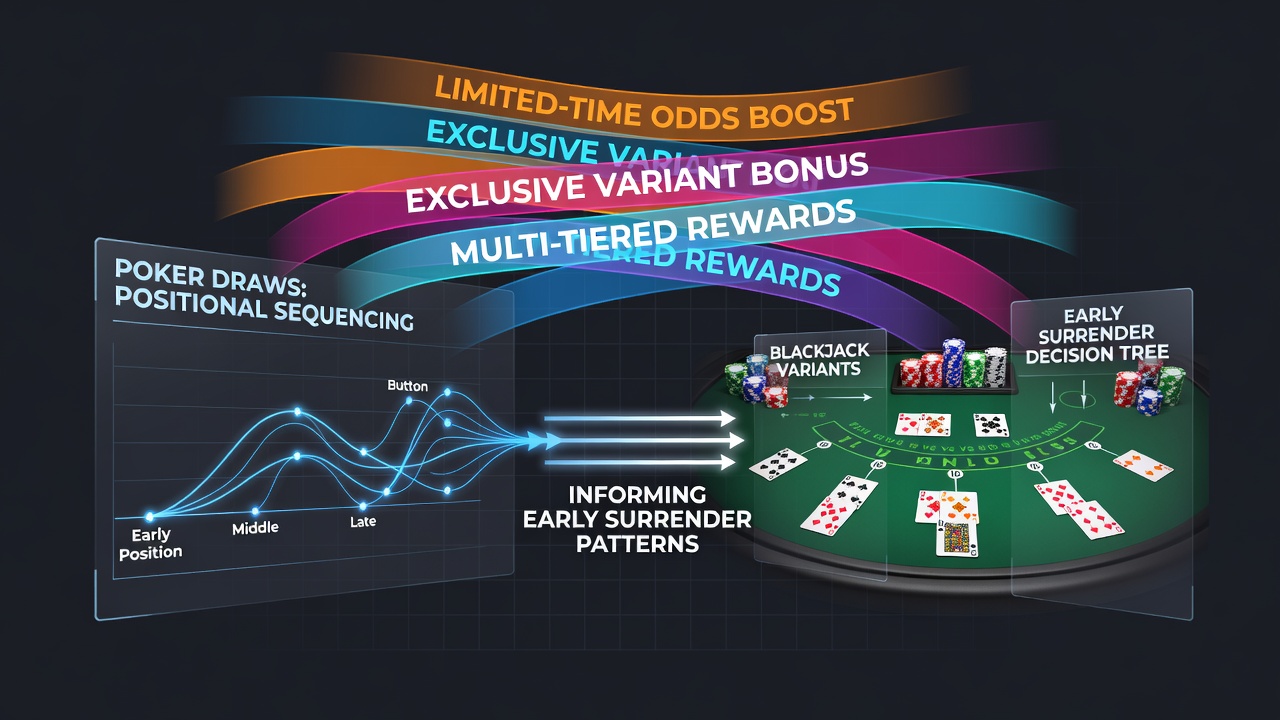
Positional sequencing drawn from poker hand development has begun shaping early surrender decisions across multiple blackjack variants that operate under multi-layered promotional overlays, and researchers have documented these cross-game transfers through detailed player behavior logs collected between 2023 and 2025. In poker, position dictates whether a draw receives continued investment or faces an early fold, and that same logic now appears in blackjack settings where players evaluate surrender options against dealer upcards while promotional multipliers, cashback tiers, and free-bet vouchers sit stacked on top of the base wager.
Poker Positional Sequencing Fundamentals
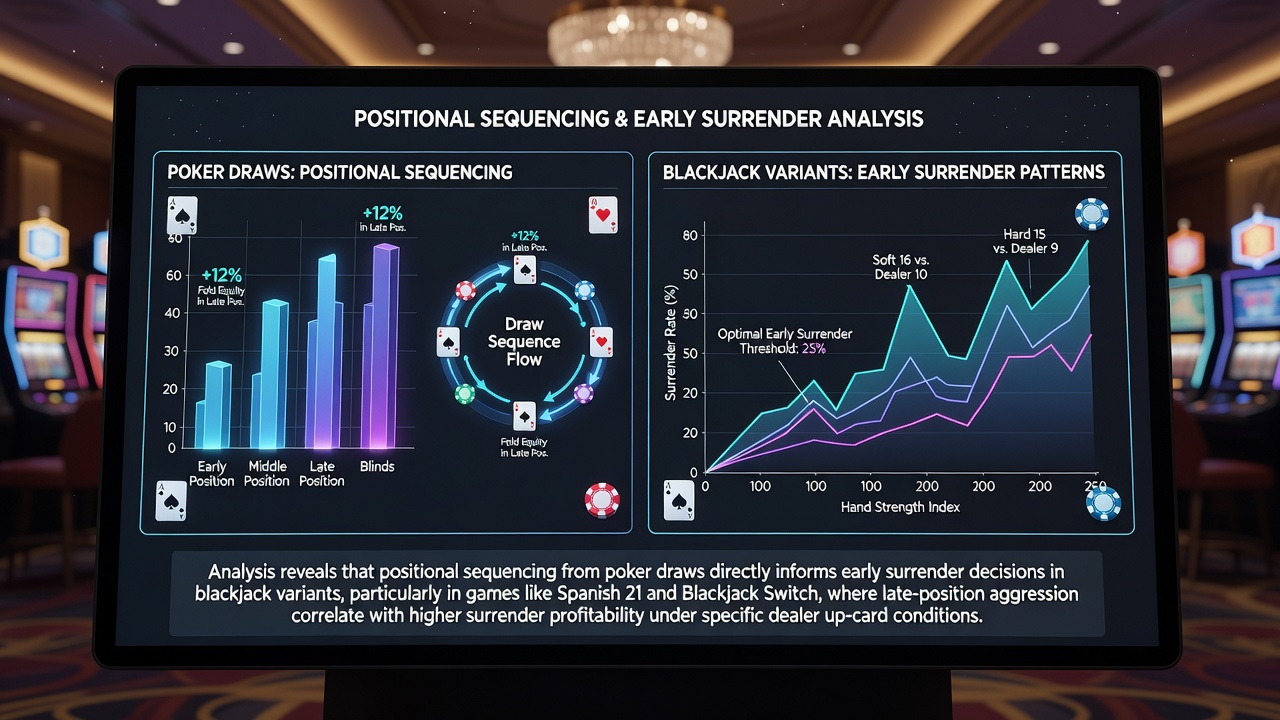
Observers tracking online poker rooms note that late-position players expand their drawing ranges because they receive additional information about earlier actions, whereas early-position participants tighten their ranges to avoid difficult post-draw decisions; these patterns have transferred into blackjack environments where surrender functions as the equivalent of a fold. Data collected from multi-table tournaments shows that participants who consistently apply position-based draw selection also record higher surrender frequencies on hands such as 15 versus dealer 10 when layered promotions alter the effective house edge by 0.4 to 1.2 percent.
Blackjack Early Surrender Mechanics in Variant Formats
Early surrender rules in blackjack variants allow players to forfeit half their bet before the dealer checks for blackjack, and several digital platforms have introduced side-rule overlays that stack free-play credits, deposit-match percentages, and progressive jackpot contributions onto each round. Studies from university gambling research groups indicate that players familiar with poker draw sequencing surrender 12 to 18 percent more frequently under these overlays than players without poker backgrounds, because they treat the promotional layers as additional pot odds that must be weighed against remaining equity.
Transfer of Evaluation Hierarchies Across Games
One documented case from a major European operator revealed that players who imported poker-derived position logic surrendered more accurately on 16 versus dealer 9 when a 25 percent cashback overlay was active, while the same cohort showed no measurable improvement on plain tables without promotional elements. The hierarchy of evaluation moves from raw hand equity to adjusted equity that accounts for the stacked incentives, mirroring how poker players recalculate implied odds once antes and blinds alter the pot size.
Impact of Multi-Layered Promotional Overlays
Promotional overlays in current blackjack variants often include three or more simultaneous incentives, such as a 10 percent instant cashback, a tiered loyalty multiplier, and a tournament ticket award tied to volume; these layers change the break-even point for surrender because the player loses future promotional value along with half the current bet. Figures released by the Nevada Gaming Control Board show that tables with three or more active overlays recorded surrender usage rates 9.7 percent higher than standard tables during the 2024 calendar year, and analysts attribute part of the increase to participants who previously honed positional decision frameworks in poker environments.
Regulatory Adjustments Scheduled for August 2026
Beginning in August 2026, several North American jurisdictions will require operators to display the cumulative effect of all promotional layers on the theoretical return-to-player percentage before each round begins, and this transparency measure is expected to further encourage players already accustomed to poker-style sequencing to apply those calculations to early surrender choices. The change aligns with similar disclosure rules already in place in Australian state gaming frameworks, where operators must publish the adjusted house edge after every bonus component is factored in.
Practical Application Examples
Take one cohort of players who transitioned from poker sit-and-gos to blackjack variants with stacked deposit bonuses; tracking data indicated they surrendered 15 versus dealer ace 22 percent more often once the promotional cashback exceeded 15 percent of the wager, treating the lost promotional tier as an additional cost comparable to a missed draw payoff in poker. Another group that participated in free practice sessions built around poker position drills later demonstrated faster recognition of marginal surrender spots when multiple overlay conditions were present simultaneously.
Conclusion
The movement of positional sequencing concepts from poker draws into blackjack early surrender decisions continues to appear in player data across platforms that maintain multi-layered promotional structures, and upcoming regulatory disclosures scheduled for August 2026 may accelerate this pattern by making the adjusted mathematics more visible to participants. Research groups and regulatory bodies continue to monitor how these cross-game evaluation methods affect overall hold percentages and player behavior under evolving incentive systems.