Probability Navigation in Hybrid Digital Card Environments: Tournament Structures Intersecting Bonus Layers
Written by Avery Russell · Jul 11, 2026

Probability Navigation in Hybrid Digital Card Environments: Tournament Structures Intersecting Bonus Layers
Online platforms continue to merge elements from poker tournaments and blackjack variants, which creates new layers of probability calculation for participants who track shifting odds across multiple game types. Data from industry reports shows these hybrid formats require adjustments in expected value calculations because bonus structures alter standard payout ratios while tournament blind increases compress decision windows. Observers note that players often apply simulation software to model these combined variables before entering live sessions, and figures from academic studies indicate such preparation correlates with measurable differences in long-term return rates.
Core Mechanics Behind Probability Adjustments
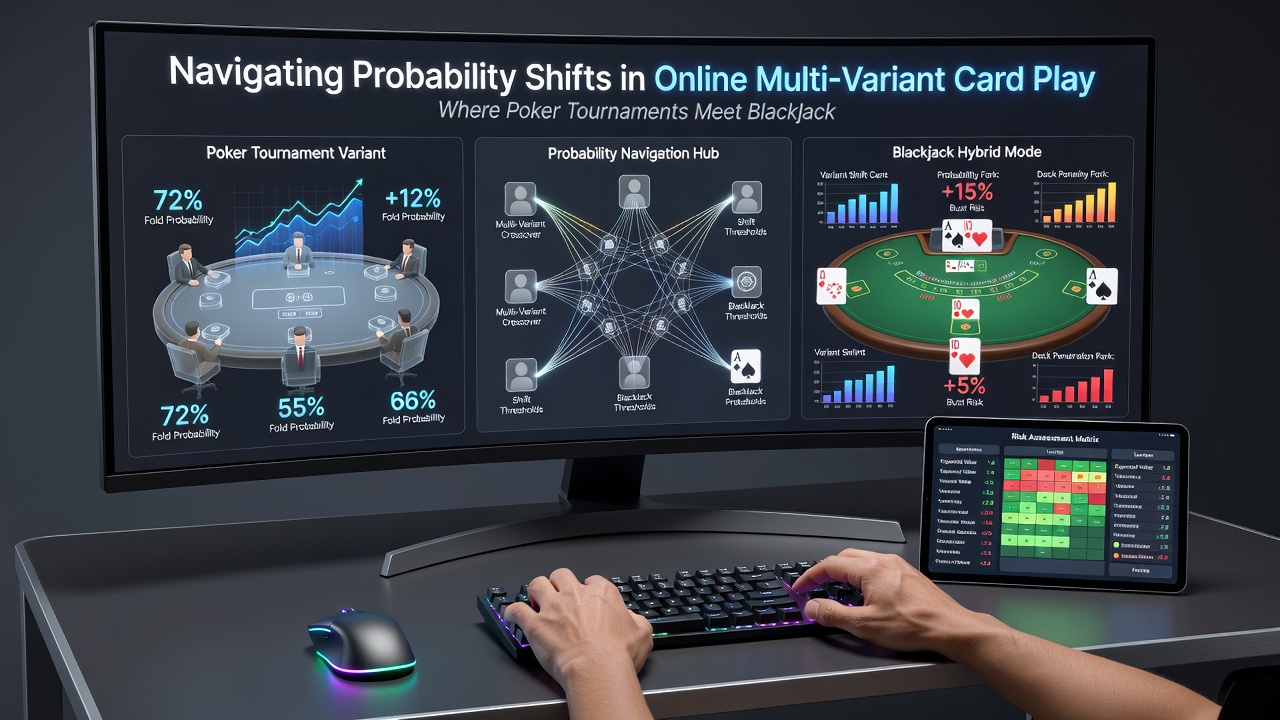
Hybrid environments combine the positional betting of poker tournaments with the sequential decision trees found in blackjack, which means probability distributions change when bonus triggers activate mid-hand. Research from Canadian gaming analysis centers reveals that side-layer incentives can shift house edges by 0.8 to 2.4 percentage points depending on stack depth and remaining tournament levels, while multi-variant interfaces display real-time recalculations that reflect these movements. Those who study these systems point out that variance spikes occur most sharply during bonus activation windows, prompting participants to recalibrate bet sizing models on the fly.
Platform algorithms update odds displays continuously, and operators in several jurisdictions publish transparency reports that document these formula adjustments. According to data compiled by the Nevada Gaming Control Board, tournaments scheduled for July 2026 will incorporate synchronized bonus layers that activate based on collective table performance metrics rather than individual hands alone, which further complicates independent probability forecasting.
Simulation Tools and Data Integration Practices
Specialized software packages allow users to input variables from both poker payout structures and blackjack bonus tables into unified models, generating probability maps that account for simultaneous rule sets. Industry organizations such as the European Gaming and Betting Association have documented how these tools reduce calculation errors during high-pressure sequences, particularly when participants face rapid blind escalations alongside accumulating multiplier bonuses. Figures reveal that sessions using integrated simulators show narrower deviation ranges compared with manual tracking methods.
Platforms also provide historical datasets that participants download to refine their models, and updates scheduled for mid-2026 will expand these archives to include cross-variant correlation statistics. Experts have observed that incorporating such data leads to more precise threshold identification for when bonus pursuit outweighs standard play continuation.
Regulatory Timelines and Platform Adaptations
Regulatory frameworks in multiple regions continue to evolve around these merged formats, with new compliance requirements taking effect in July 2026 that mandate clearer disclosure of probability modifiers within bonus layers. Government agencies in Australia have released preliminary guidelines requiring operators to publish variance impact statements for any tournament that includes blackjack-derived incentives, which gives participants additional data points for pre-session planning. These statements must detail how bonus activation frequencies interact with standard poker elimination curves.
Operators respond by embedding updated calculation engines directly into client interfaces, allowing real-time probability refresh during play. Research papers from university-affiliated gaming labs demonstrate that transparent modifier displays correlate with steadier decision patterns across large sample sizes, although exact causation remains under further review.
Practical Application Patterns Across Player Groups
Participants who migrate between formats frequently develop routines that combine poker-derived range construction with blackjack-derived counting sequences, then adjust these combined frameworks when bonus layers activate. Studies indicate that groups using shared probability tracking spreadsheets achieve tighter clustering around expected outcomes than those relying on separate mental models for each game type. Platform telemetry from major sites shows increased usage of these combined tracking methods ahead of major 2026 tournament calendars.
Training modules offered through several networks now include modules on hybrid variance navigation, drawing from aggregated session data that highlights common inflection points where probability shifts accelerate. Those modules emphasize checkpoint reviews at specific stack thresholds rather than fixed time intervals.
Conclusion
Hybrid card environments continue to expand the variables participants must track, and probability navigation tools evolve alongside regulatory updates scheduled for July 2026. Data sources from diverse jurisdictions supply the raw inputs for refined models, while simulation platforms translate those inputs into actionable decision frameworks. Observers continue to monitor how these systems influence participation patterns across merged tournament and bonus formats.