Poker Ranking Integration Shapes Blackjack Side Bet Modifications in Promotional Online Systems and Physical Table Variants
Written by Paul Lorenz · Jul 8, 2026
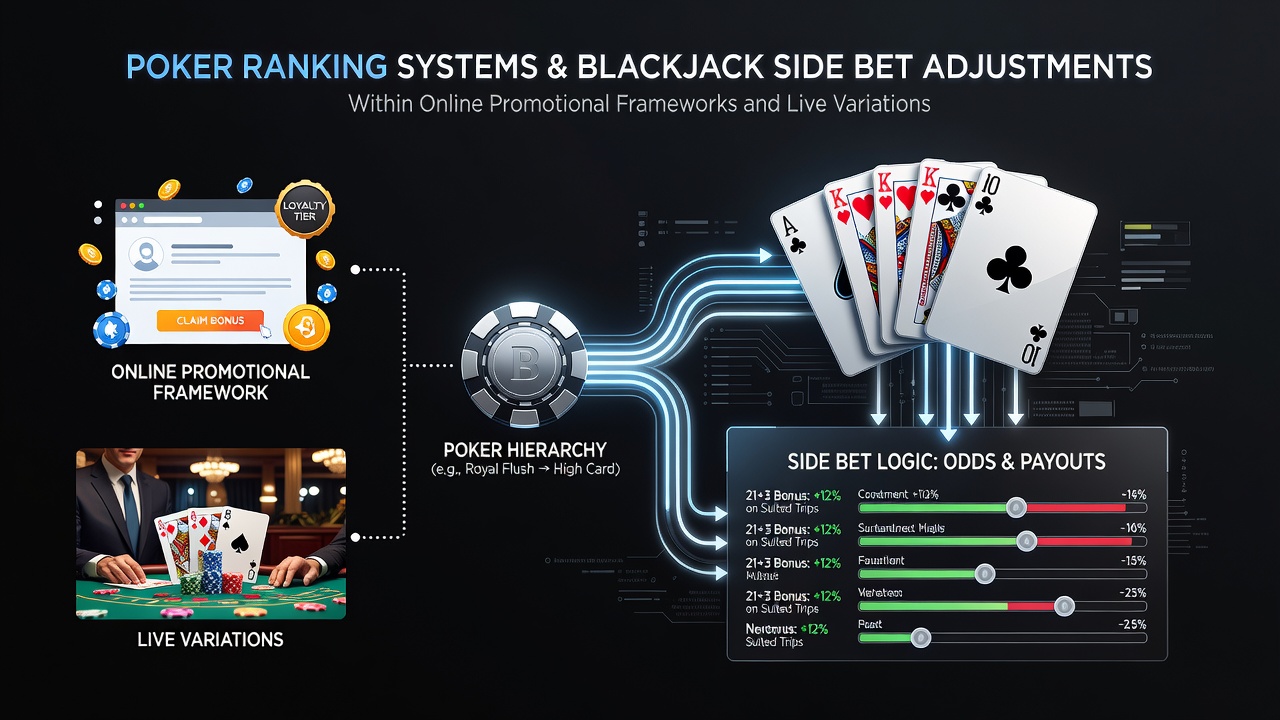
Poker Ranking Integration Shapes Blackjack Side Bet Modifications in Promotional Online Systems and Physical Table Variants
Online platforms and live dealer environments apply poker hand hierarchies to refine blackjack side bet structures within promotional layers, creating layered payout tables that respond to player activity and regulatory calendars. Data from industry tracking services shows side bet participation rates climbing when operators tie adjustments directly to standard poker sequences such as pairs, straights, and flushes. These hierarchies supply the evaluation framework operators use to recalibrate odds and bonus multipliers each quarter.
Mechanics of Hierarchy Transfer in Digital Settings
Digital systems encode poker rankings into side bet algorithms so that three-card combinations trigger scaled rewards when they match established sequences. Research from gaming analytics firms indicates that platforms adjust these triggers during promotional windows to maintain house edge targets between 2.5 and 8 percent depending on jurisdiction. Operators monitor real-time data streams, then shift payout percentages for specific hands like three-of-a-kind or straight flushes without altering base blackjack rules.
Promotional frameworks often introduce temporary multipliers on side bets when players reach volume thresholds measured in hands played. The same poker-derived logic determines which combinations qualify for those multipliers, allowing seamless integration across multiple game variants hosted on a single site. Figures released by the American Gaming Association reveal that such linked promotions increase average session length by measurable margins when side bet options remain visible throughout the lobby interface.
Live Dealer Adaptations and Table-Side Calibration
Physical venues incorporate identical ranking logic yet apply it through dealer procedures and floor supervisor oversight rather than automated scripts. Live variations frequently feature rotating side bet menus that reference poker sequences to decide when certain bets become active or deactivated during peak hours. Observers note that tables using these systems maintain consistent decision trees so players encounter familiar evaluation criteria whether they switch between digital and in-person play.
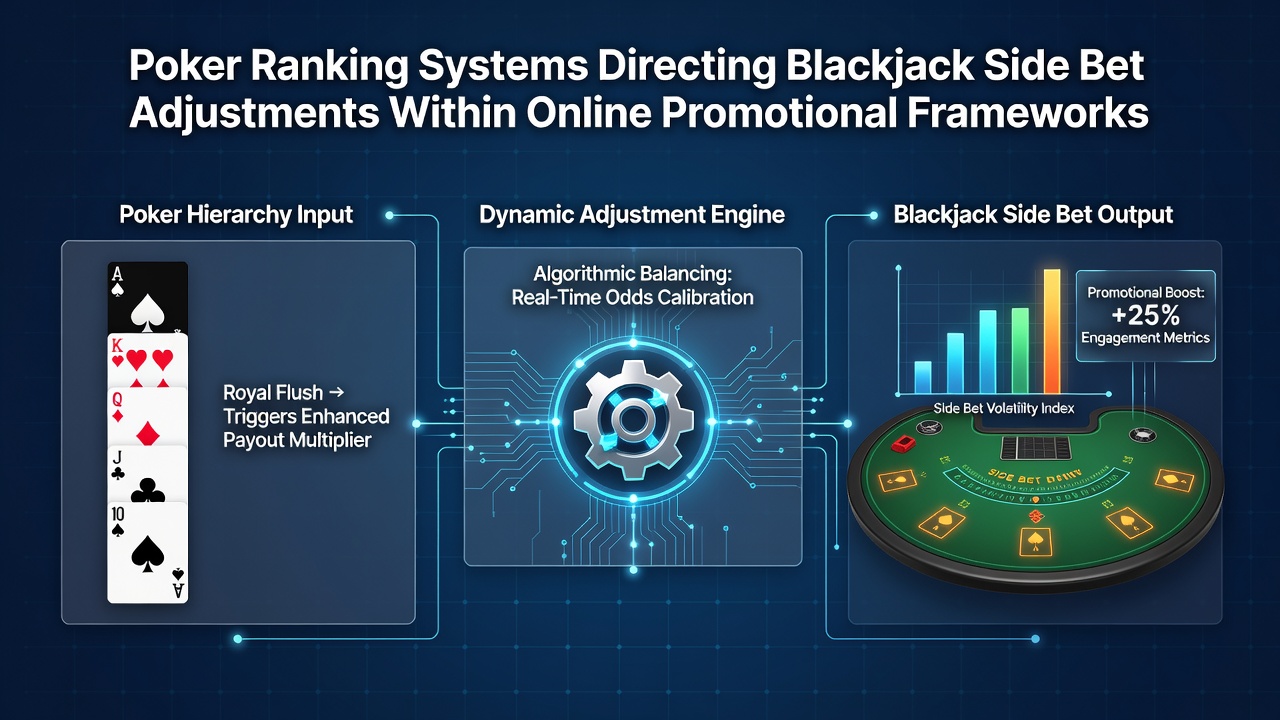
July 2026 marks the scheduled implementation window for several international licensing renewals that require operators to document how side bet modifications preserve statistical integrity across formats. Regulatory filings from bodies such as the Malta Gaming Authority and the Nevada Gaming Control Board emphasize transparent disclosure of any ranking-based triggers used in bonus structures. Venues preparing for these reviews have begun publishing updated side bet sheets that list qualifying poker combinations alongside corresponding payout rates.
Adjustment Protocols and Promotional Triggers
Operators follow documented protocols when shifting side bet parameters in response to promotional campaigns. A typical sequence begins with analysis of hand frequency data drawn from thousands of rounds, followed by application of poker hierarchy weights to identify which combinations produce the desired player return percentages. Once calculated, the revised parameters load into both online random number generator modules and printed table placards for live environments.
Case examples from multi-state operators illustrate how a single ranking system update can propagate across dozens of game skins simultaneously. One documented rollout adjusted the payout for flush-based side bets from 40-to-1 to 35-to-1 while simultaneously increasing the straight payout to maintain overall return-to-player figures. Such coordinated changes rely on the shared poker reference to ensure players recognize the logic regardless of platform.
Cross-Format Consistency and Player Interface Design
Design teams prioritize interface elements that display poker sequence icons next to side bet buttons so users transfer knowledge between sessions. Studies conducted by university research groups on digital gaming behavior indicate that consistent visual mapping reduces decision latency when players move from practice modes to real-money tables. The same consistency supports compliance teams during audits because evaluators can trace each adjustment back to a fixed ranking table rather than ad-hoc rule sets.
External reporting from the Canadian Gaming Association highlights that jurisdictions requiring periodic side bet reviews have adopted standardized templates incorporating poker hand classifications. These templates streamline the submission process and reduce revision cycles when operators propose new promotional overlays. The result appears in unified rule sheets that list both online and live dealer variants under one hierarchy structure.
Conclusion
Poker ranking systems continue to supply the structural backbone for side bet recalibrations across promotional frameworks and live variations. Data streams, regulatory calendars, and interface design choices all converge on these established sequences to produce measurable adjustments while preserving recognizable evaluation logic for participants. As July 2026 approaches, further refinements tied to licensing cycles will likely extend the same methodology into additional jurisdictions and game formats.