Mapping Hierarchy Systems from Competitive Card Events to Variant Preferences in Online Reward Structures
Written by Avery Russell · Jul 20, 2026
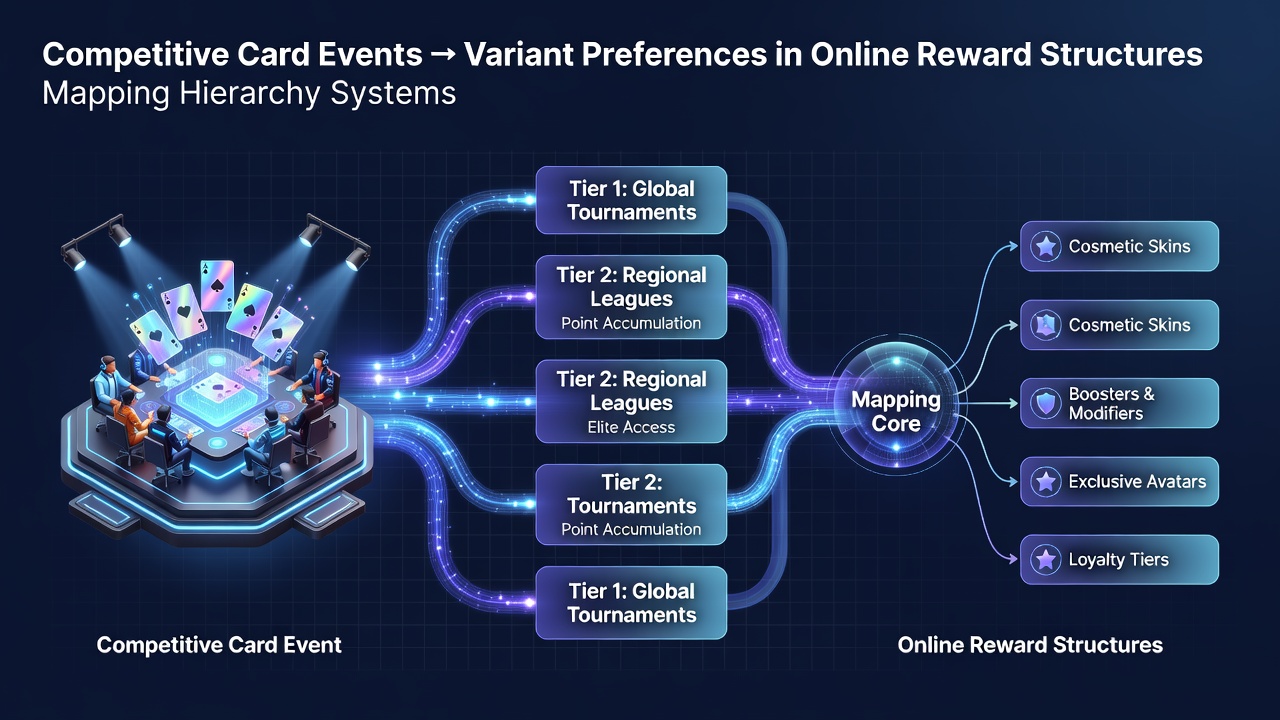
Mapping Hierarchy Systems from Competitive Card Events to Variant Preferences in Online Reward Structures
Competitive card events establish clear evaluation hierarchies where participants assess risk levels, hand strength indicators, and positional advantages through repeated exposure to structured tournaments, and these frameworks transfer directly into selections among online card variants that incorporate layered reward systems such as bonus multipliers and progressive incentives. Observers note that players develop systematic approaches to decision trees during live events, prioritizing factors like opponent modeling and probability weighting, which then shape preferences when engaging digital platforms that offer variant options tied to promotional structures.
Foundational Elements in Event-Based Hierarchies
Research from gaming studies programs at institutions across North America indicates that tournament participants build layered evaluation models beginning with basic probability calculations, then advancing to integrated assessments incorporating table dynamics and payout structures, while data from event tracking services reveals consistent patterns where experienced competitors favor variants that reward calculated aggression over conservative play. These hierarchies emerge through progressive rounds that test adaptability, and participants often refine their internal ranking systems based on feedback loops from elimination phases and final table scenarios.
Transfer Mechanisms to Digital Environments
Digital reward structures mirror these event hierarchies by assigning point values and bonus tiers that correspond to risk-reward calculations honed in competitive settings, and figures from industry reports compiled by organizations like the Australian Gambling Research Centre demonstrate how users with tournament backgrounds gravitate toward variants featuring escalating multipliers during specific promotional windows. What's interesting is that the same decision weighting applied to hand selection in events guides choices among online options where reward layers depend on session length and cumulative performance metrics.
Studies conducted by European research networks on digital gaming behaviors show that individuals map their established hierarchies onto variant interfaces by prioritizing elements such as volatility indices and bonus trigger frequencies, creating preference clusters that align closely with event-derived strategies. Regulatory updates scheduled for implementation in July 2026 across several jurisdictions will require platforms to disclose variant payout hierarchies more transparently, potentially accelerating these mapping processes as users gain clearer visibility into reward alignments.
Variant Selection Patterns Linked to Reward Layers
Evidence from longitudinal tracking of player accounts indicates that those progressing through competitive card circuits demonstrate stronger alignment between their established evaluation orders and selections of online variants offering tiered bonuses, whereas data compiled by Canadian provincial gaming authorities highlights measurable differences in session outcomes when reward structures emphasize consistency over high-variance opportunities. And yet the connections strengthen when platforms integrate real-time analytics that echo the feedback mechanisms present in tournament software.
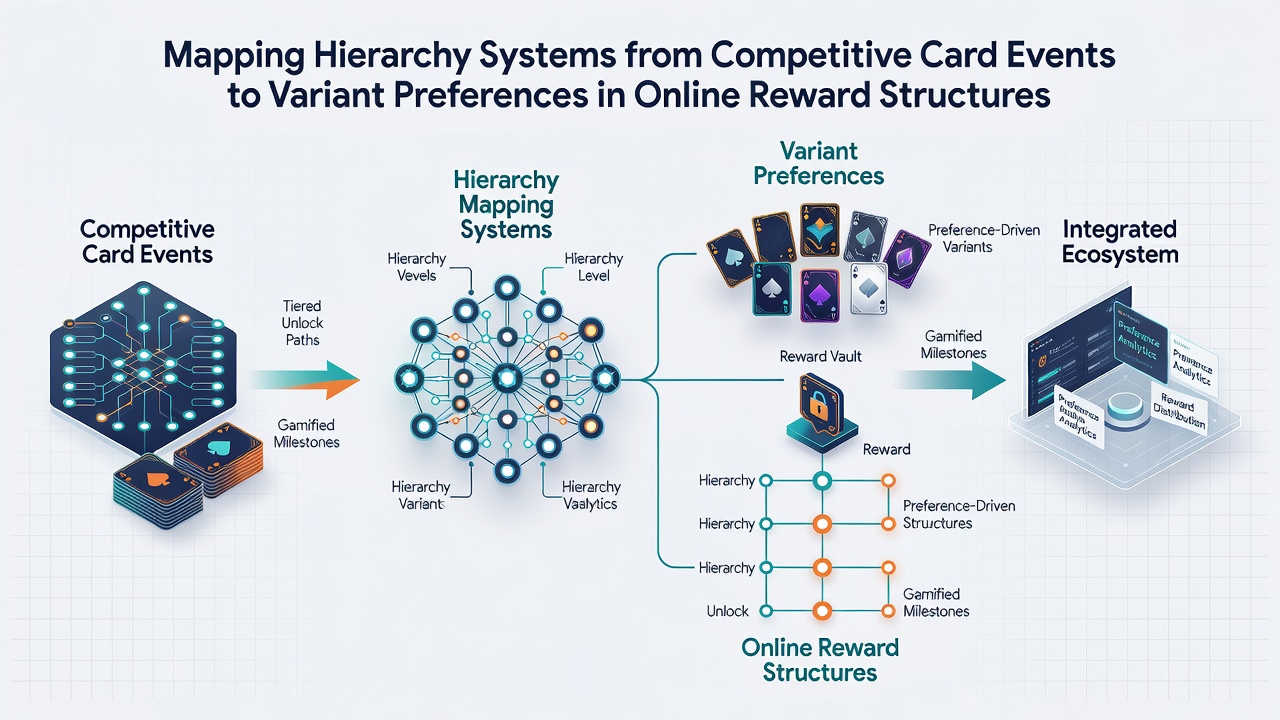
One documented case involved a cohort tracked over multiple seasons where participants applied event-honed risk hierarchies to navigate variants with complimentary play elements, resulting in differentiated engagement rates compared to groups without competitive backgrounds. These patterns suggest that online environments function as extensions of event hierarchies rather than separate domains, particularly when reward systems incorporate progression mechanics similar to tournament advancement ladders.
Regulatory Context and Platform Adaptations
According to analyses prepared by the Singapore Ministry of Home Affairs gaming oversight division, upcoming compliance requirements effective July 2026 will standardize how operators present variant hierarchies within reward frameworks, which may further facilitate teh transfer of evaluation models from physical events to digital interfaces. Industry associations including the World Lottery Association have published position papers noting that transparent mapping tools could enhance user comprehension of how competitive strategies interact with promotional layers.
Additional findings from academic collaborations between universities in Australia and the United States reveal that reward structure complexity influences the speed at which hierarchies migrate, with simpler bonus systems enabling faster adaptation while intricate multi-tier incentives demand more refined decision frameworks developed through event participation. Platforms responding to these insights have begun embedding comparative displays that highlight alignment between user-established priorities and available variant options.
Conclusion
The mapping of hierarchy systems from competitive card events to online variant preferences operates through consistent transfer of evaluation frameworks that prioritize risk calibration and reward alignment, supported by data across multiple regulatory regions and research initiatives. As platforms adjust to July 2026 transparency standards from diverse oversight bodies, these connections are expected to become more explicit, allowing participants to apply event-derived models with greater precision within digital reward environments.