Framework Transfers in Card Gaming: Poker Tournament Experience Shaping Blackjack Variant Preferences Within Virtual Bonus Structures
Written by Paul Lorenz · Jun 20, 2026
Framework Transfers in Card Gaming: Poker Tournament Experience Shaping Blackjack Variant Preferences Within Virtual Bonus Structures
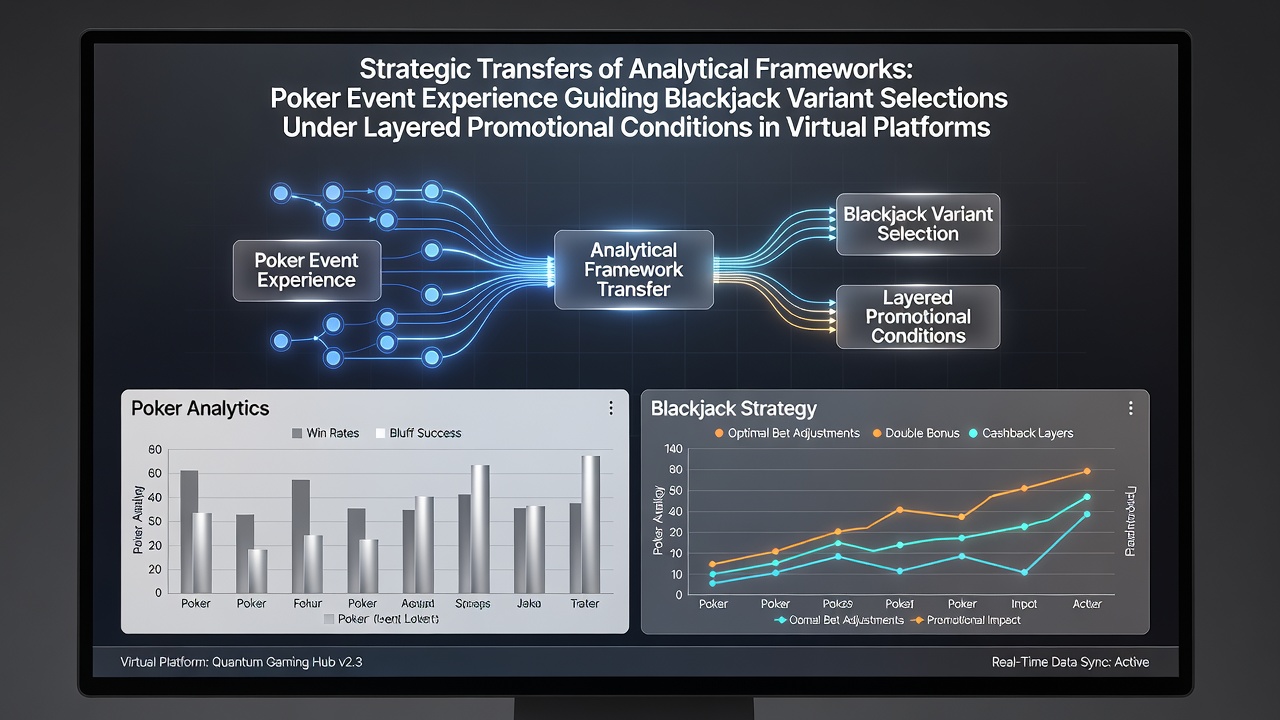
Players often move between poker events and blackjack tables on virtual platforms where layered promotional conditions influence decision making, and researchers have documented how analytical skills developed in one format carry over to the other. Data from multiple studies indicate that participants who regularly compete in poker tournaments apply risk assessment techniques when selecting among blackjack variants that include stacked bonus offers, free spin incentives, and deposit match structures. These transfers occur because both games require rapid evaluation of probabilities under uncertainty, although the specific mechanics differ substantially between community card formats and dealer versus player confrontations.
Poker Event Structures and Their Analytical Demands
Tournament formats in poker emphasize chip management, position awareness, and opponent modeling across extended sessions, while observers note that these same cognitive processes appear in blackjack environments when players must weigh variant rules against current promotional overlays. Research published in the Nevada Gaming Control Board reports shows that participants who maintain detailed records of past tournament outcomes demonstrate improved accuracy when forecasting expected value across multiple blackjack rule sets during promotional periods. The reality is that virtual platforms frequently present several blackjack options simultaneously, each with distinct payout tables and side bet configurations that reward different decision thresholds.
Those who have tracked player behavior across digital card sites report that individuals with extensive poker experience tend to favor variants featuring surrender options or favorable deck penetration when bonus multipliers activate, since these conditions align with the fold equity calculations common in tournament poker. Figures reveal consistent patterns where players adjust their session lengths and bet sizing strategies based on the depth of promotional layers rather than isolated game rules alone.
Blackjack Variant Selection Under Layered Promotions
Virtual platforms layer multiple incentives including cashback percentages, loyalty point accelerations, and limited time multipliers that change the effective house edge of each variant throughout a session. Studies from the Canadian Gaming Association indicate that players who previously competed in poker events adapt more quickly to these shifting conditions because they already practice real time adjustment of strategy based on changing stack sizes and payout structures. Blackjack variants with progressive side bets or multi hand configurations present additional variables that reward the same type of combinatorial thinking developed during multi table poker tournaments.

One documented case involved players who used poker derived range construction methods to evaluate which blackjack variant offered the highest return when a platform activated simultaneous deposit match and cashback offers in early 2025. These individuals prioritized variants where basic strategy charts aligned most closely with the bonus activation thresholds rather than defaulting to the most popular game title. Platform analytics further demonstrate that such selection patterns become more pronounced during periods when promotional conditions overlap across several game types at once.
Skill Transfer Mechanisms in Digital Environments
Virtual platforms record detailed session data that allows comparison of decision quality between players with different background experience levels. Evidence suggests that poker tournament veterans apply bankroll allocation models when distributing play across variants under time limited promotions, resulting in different exposure patterns compared to participants without that history. The transfer appears most clearly in how individuals respond to variance introduced by side bet structures and rule modifications that appear in many online blackjack offerings.
Researchers at academic institutions have examined these patterns through controlled observation of player cohorts, finding measurable differences in variant persistence rates that correlate with prior exposure to structured poker events. Platforms preparing for regulatory updates scheduled around June 2026 continue to refine their promotional architectures in ways that may further reward analytical transfers between game formats.
Conclusion
Strategic framework transfers from poker events continue to shape how participants navigate blackjack variant options within virtual environments that feature complex promotional layering. Available data from regulatory bodies and industry associations demonstrate consistent behavioral patterns that link experience across these card game formats, particularly when multiple incentives operate simultaneously. As platforms evolve their offerings ahead of upcoming regulatory timelines, the documented analytical connections between poker tournament experience and blackjack decision processes remain relevant for understanding player behavior in digital card environments.