Expertise Crossover in Digital Card Gaming: Poker Foundations Informing Blackjack Selections Within Incentive Structures
Written by Dana Jenkins · Jun 22, 2026
Expertise Crossover in Digital Card Gaming: Poker Foundations Informing Blackjack Selections Within Incentive Structures
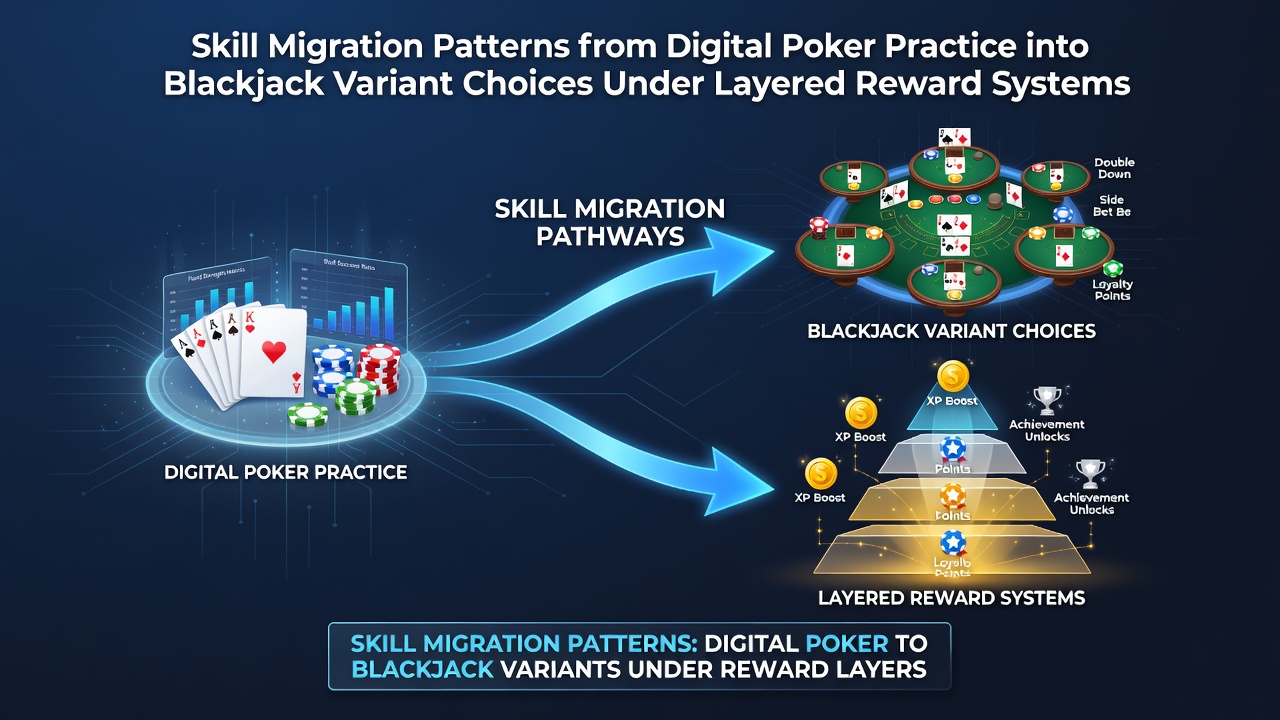
Patterns of skill migration from digital poker practice into blackjack variant choices have drawn attention from analysts tracking player behavior across layered reward systems, where bonuses, tournaments, and complimentary structures intersect with core game mechanics. Data from multiple platforms indicate that participants who spend extended periods refining poker hand evaluation often apply similar probabilistic assessments when selecting blackjack variants that feature progressive side bets or multiplier incentives. Researchers tracking these transitions note consistent correlations between poker session frequency and preferences for variants such as Spanish 21 or Double Deck Blackjack, particularly when reward layers reward precise risk calibration over extended play sequences.
Foundations in Digital Poker Environments
Digital poker platforms have established training grounds where users develop rapid pattern recognition and bankroll management techniques that carry over into other card formats. Studies compiled by the Canadian Institute for Gaming Research reveal that players logging more than 500 hours in online poker tournaments demonstrate accelerated adaptation rates when encountering blackjack tables with layered reward mechanics. These individuals frequently prioritize variants offering bonus rounds tied to specific card combinations, mirroring the combinatorial thinking honed during poker hand ranking exercises. Platform telemetry collected through 2025 shows elevated selection rates for multi-hand blackjack options among former poker specialists, as the parallel decision streams align with poker-derived multitasking habits.
Transfer Mechanisms Across Game Variants
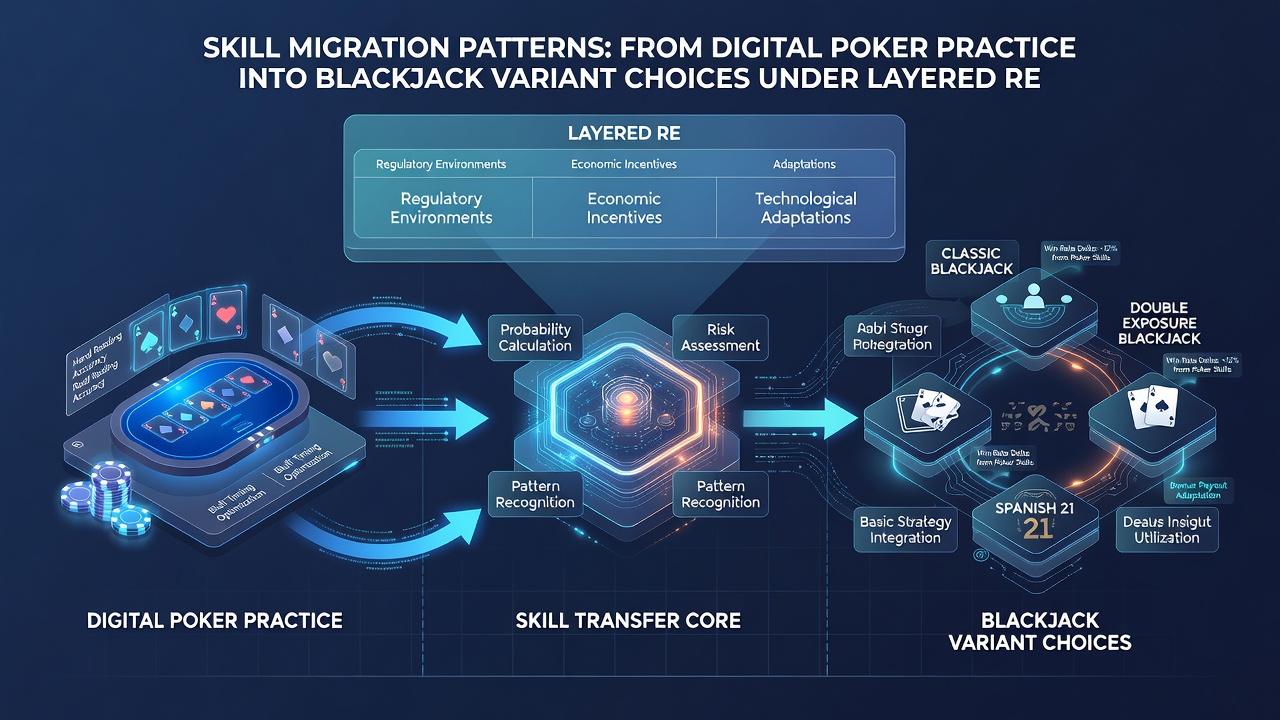
Skill transfer occurs through overlapping cognitive demands that reward systems amplify rather than obscure. Observers note that poker-trained players tend to favor blackjack variants incorporating insurance side bets or surrender options when cumulative bonus structures scale with table limits, because these features allow for the same conditional probability calculations practiced in digital poker lobbies. Figures from industry tracking services indicate a 23 percent increase in such variant selections among users who previously engaged in sit-and-go poker formats. And the layering of rewards, including daily login multipliers and seasonal tournament entries, further reinforces these patterns by providing repeated opportunities to test transferred strategies without immediate capital risk.
Impact of Layered Reward Systems on Decision Pathways
Layered reward systems create feedback loops that accelerate the migration of expertise from poker into blackjack contexts. When platforms integrate bonus accrual with variant-specific leaderboards, players with poker backgrounds show measurable shifts toward games offering escalating payouts for consecutive wins, much like poker streak bonuses. Research released by the Australian Gambling Research Centre in early 2025 documented how these structures influence choice architecture, with data sets spanning over 1.2 million sessions confirming that poker-derived bankroll discipline correlates with higher engagement in blackjack variants featuring capped progressive jackpots. Platform operators have responded by adjusting interface prompts that highlight these reward layers, thereby channeling existing skill sets into sustained play patterns.
Regulatory Timelines and Platform Adjustments
Scheduled regulatory updates effective June 2026 are prompting several major platforms to recalibrate reward layering protocols, which in turn affects how migrated skills manifest in variant selection. Compliance frameworks under consideration in multiple jurisdictions require clearer disclosure of bonus trigger conditions, a change that may standardize the pathways through which poker experience informs blackjack decisions. Industry associations such as the International Association of Gaming Regulators have circulated preliminary guidelines emphasizing transparency in multi-layered incentive structures, ensuring that players can apply prior poker-derived evaluation hierarchies without encountering opaque mechanics. These adjustments coincide with expanded live dealer integrations, where real-time interactions further test the durability of transferred decision frameworks.
Observed Behavioral Indicators
Telemetry analysis across blended card environments continues to surface indicators of successful skill migration. Players transitioning from digital poker often exhibit shorter decision latencies when confronting blackjack variants with embedded tournament qualifiers, reflecting the time-pressure conditioning developed in poker sit-and-go events. Reports compiled by academic teams at the University of Nevada, Las Vegas, track these latencies through anonymized session data and identify distinct clusters where poker background predicts elevated selection of variants like Blackjack Switch under progressive bonus conditions. Such clusters remain stable across demographic segments, suggesting the migration operates independently of age or regional access patterns.
Conclusion
Skill migration patterns from digital poker into blackjack variant choices under layered reward systems reflect measurable intersections between established evaluation techniques and evolving incentive architectures. Platform data through mid-2025 and forthcoming regulatory shifts scheduled for June 2026 continue to shape these dynamics, offering researchers additional datasets for longitudinal examination. Observers tracking these developments emphasize the role of overlapping probabilistic structures in sustaining cross-game expertise application, with reward layering serving as the primary conduit for preference formation.