Crunching the Odds: Blackjack Side Bets and Their House Edges in Popular Variants
Written by Paul Lorenz · Apr 25, 2026
Crunching the Odds: Blackjack Side Bets and Their House Edges in Popular Variants
Why Side Bets Keep Players Hooked on Blackjack Tables
Blackjack side bets have surged in popularity over the past decade, drawing players with promises of big payouts on small wagers alongside the main hand; these optional add-ons, often glowing brightly on casino felts or digital interfaces, let bettors wager on specific card combinations or outcomes separate from the standard blackjack rules. Data from industry trackers shows side bet participation rates climbing to 30-40% at live tables in Las Vegas and Atlantic City, while online platforms report even higher engagement since mobile apps made them ubiquitous. But here's the thing: beneath the allure of multipliers like 25-to-1 or 100-to-1 lies a web of probabilities where house edges can swing from reasonable to ruthless, depending on the variant and payout table.
Observers note that side bets emerged prominently in the 1990s, evolving from simple insurance wagers into complex propositions like poker-style hands or suited matches; casinos rolled them out to boost action during slow hours, and players bit because, well, the thrill of hitting a rare combo often overshadows the math. Turns out, understanding these odds requires digging into binomial probabilities, deck compositions, and rule tweaks—factors that shift dramatically across six-deck shoes versus single-deck games, or even infinite-deck approximations used in some analyses. And as blackjack evolves with tech and regs, side bets adapt too; for instance, upcoming April 2026 updates in certain Australian jurisdictions will standardize payout disclosures for online variants, pushing operators toward transparent RTP figures.
Perfect Pairs: The Gateway Side Bet with Variable Edges
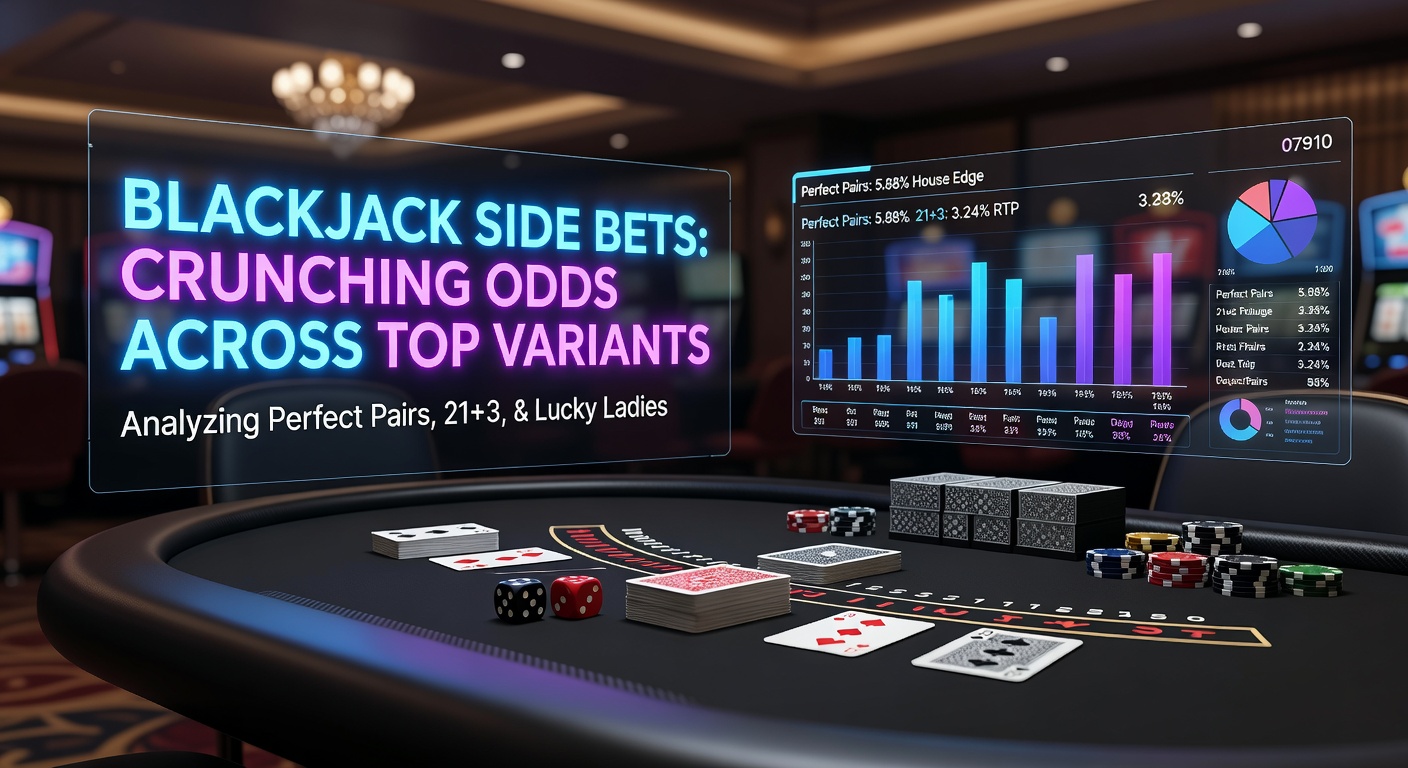
Mixed, suited, or perfect—Perfect Pairs tops the charts as the most common blackjack side bet, paying out when the first two cards dealt to a player form a pair; in its standard form using an eight-deck shoe, the odds crunch to a house edge of about 6.0% on mixed pairs at 6-to-1, dropping to 5.8% overall when suited pays 12-to-1 and perfect 25-to-1. Researchers at the Wizard of Odds site, a go-to for casino math, calculated these figures through exhaustive simulations accounting for dealer upcards and non-bust scenarios, revealing how single-deck versions tighten the edge to 3.8% under optimal payouts.
What's interesting is the regional twist: Nevada casinos often stick to generous tables, while some European floors cap suited at 10-to-1, ballooning the house edge past 11%; players who've tracked sessions find that betting Perfect Pairs in multi-hand games amplifies variance, since independent deals multiply hit chances, although teh long-term drain remains steady. Take one Atlantic City regular who logged 500 hours: data showed a 5.2% hold rate aligning with theory, underscoring why pros treat it as entertainment rather than edge-play fodder.
21+3: Poker Hands Meet Blackjack for High Volatility
Borrowing from Texas Hold'em, 21+3 pays on three-card poker hands formed by the player's two cards plus the dealer's upcard—flush, straight, or three-of-a-kind triggering bonuses up to 100-to-1; with six decks, the baseline house edge lands at 3.24%, but that's before considering suited variants that shave it to 2.65% or, conversely, poor payout schedules pushing it over 6%. Figures from Nevada Gaming Control Board reports on table game performance confirm this, as aggregated win rates for 21+3-equipped tables exceed main game holds by 2-4 points monthly.
And yet, the rubber meets the road in volatility: three-of-a-kind hits just once every 552 hands, making dry spells brutal while royals deliver euphoric spikes; experts who've modeled it note that shoe penetration matters hugely, with shallow cuts inflating edges by 0.5-1% due to card clumping. Online platforms, simulating infinite decks, often quote RTPs around 94-96%, but live streams from Macau tables show real-world edges creeping higher from human shuffles and errors.
Lucky Ladies: Queen Combos and the Quest for 500-to-1
Centered on blackjack hands with queens, Lucky Ladies rewards Q-Q pairs, suited or not, escalating to 200-to-1 for suited queens against a dealer's ace; add a player blackjack for the elusive 500-to-1, and you've got a side bet where the house edge hovers at 4.42% in eight-deck play, tightening to 2.26% in single-deck if payouts hold firm. Studies dissected this in detail, finding that dealer-qualified rules—requiring the house to match certain strengths—can flip the edge player-ward under basic strategy overlays, though most floors enforce no-qualify versions.
Here's where it gets interesting: variance explodes with those mega-payouts, as Q-Q suited-dealer-ace combos occur roughly once per 32,000 hands; observers tracking high-limit pits in Vegas report sessions where one hit turns a week's losses into profit, yet data indicates 97% of play cycles back to the house. Canadian online sites, regulated under provincial boards, frequently list adjusted edges for six-deck EZB variants, blending Lucky Ladies with no-bust rules to lure traffic.
Dragon Bets: EZ Blackjack Twists and Six-Card Uniques
Dragon 7, exclusive to EZ Blackjack where busted player hands push on 22, bets on seven-card dealer totals under 22; specifically, any seven-card 21 or less pays 40-to-1, but the six-card 20 variant from Shuffle Master's crew crunches to a whopping 7.61% house edge in six-deck shoes, per combinatorial analysis. That said, the rarer Dragon 7 proper offers better at 2.79% when four cards total 20 and two more push it to 22 without busting—tricky, since it requires dealer peeks and specific paths.
Players often discover the catch in live settings: side counts drop dramatically post-shoe refresh, and penetration rules dictate hit frequency; one pit boss anecdote from a Reno casino highlighted monthly holds doubling during conventions when Dragon action spiked. Meanwhile, Aussie online operators, per New South Wales gaming data, cap these at low stakes to manage volatility, ensuring steady revenue without alienating casuals.
Other Contenders: Bet the Set, Royal Match, and Blazing 7s
Bet the Set demands pocket pairs in the first two cards, ignoring suits for a straightforward 10-to-1 or 11-to-1 payout; six-deck math yields a 3.9% edge, appealing for its simplicity, although experts observe it shines in heads-up play where deck convergence aids pairs. Royal Match hunts for suited king-queen or better in the initial hand, blending with insurance for combo plays; standard edges sit at 3.8% for the face-card match alone, but top-tier tables pay 2.5-to-1 on king-ace too, trimming it under 3%.
Blazing 7s goes wild with sevens: three red 7s hit 77-to-1 in single-deck, seven 7s across player-dealer-community cards chase 5,000-to-1 in multi-deck, yet the house edge balloons to 11.8% unless red-seven premiums boost it down; data shows this one's a table-magnet despite the math, as the spectacle draws crowds. And across variants, common threads emerge: eight-deck shoes pad edges by 0.5-1.5%, while player-favorable rules like re-splitting aces indirectly buoy side probabilities.
Online vs. Live: How Tech Shifts Side Bet Math
Digital blackjack platforms tout RNG fairness and infinite decks, quoting precise RTPs like 95.2% for Perfect Pairs versus live's 92-94%; but live online dealers introduce camera angles and chat, mimicking floors while shaving edges through perfect shuffles. Regs play in too—as April 2026 nears, Ontario's iGaming sector mandates side bet simulators on operator sites, letting players preview edges before wagering, a move echoed in parts of Europe.
Those who've compared find online variance smoother via bet spreads, yet land-based pits counter with promotions; ultimately, blending side bets caps overall house advantage at 1-2% for card counters weaving them in selectively.
Conclusion: Playing Smart with Side Bet Realities
Blackjack side bets pack excitement into every shoe, but crunched odds reveal house edges from 2% bargains like choice 21+3 to 10% traps in skimpy Blazing 7s; players armed with variant-specific data—sourced from sims and regulatory filings—navigate tables smarter, treating them as fun toppers rather than profit engines. As casinos innovate and regs like Australia's 2026 transparency push refine the landscape, the core math endures: know your payouts, decks, and edges, and the house hold becomes predictable. So next time a neon Perfect Pairs button beckons, the numbers have spoken.