Charting Choices in Blended Card Formats: Tournament Stress Guides Blackjack Variant Picks Amid Bonuses and Complimentary Play
Written by Paul Lorenz · May 30, 2026
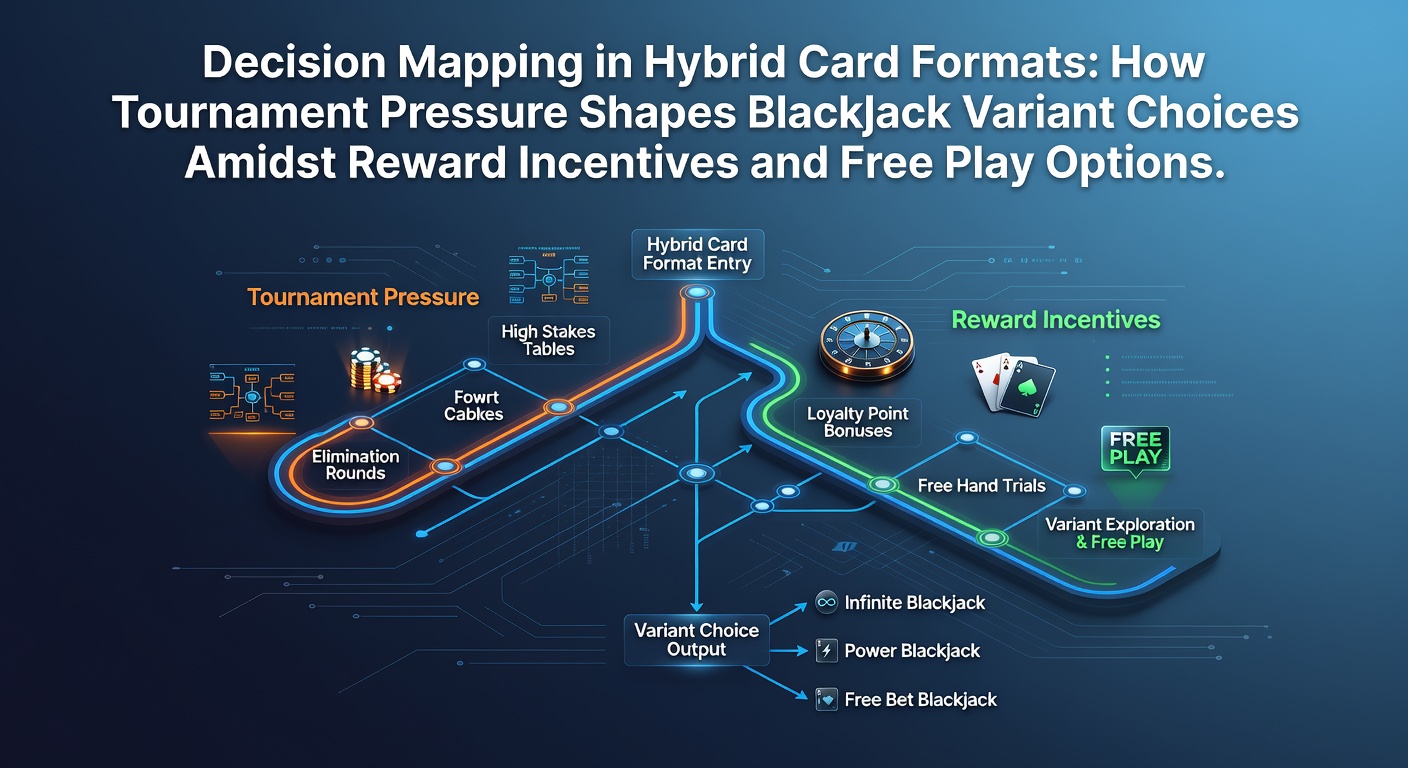
Charting Choices in Blended Card Formats: Tournament Stress Guides Blackjack Variant Picks Amid Bonuses and Complimentary Play
Decision mapping serves as a structured approach that players apply when navigating hybrid card formats blending blackjack mechanics with elements drawn from other table games, and tournament conditions add layers of pressure that shift how participants weigh variant options against available reward incentives along with free play opportunities. Observers note that these formats often incorporate side bets or progressive jackpots which alter standard blackjack probabilities while free play credits function as buffers allowing extended sessions without immediate financial outlay. Data from industry reports shows that participants in such environments frequently adjust their selection criteria based on entry fees, payout structures, and time constraints inherent to competitive events.
Core Elements of Decision Mapping in Hybrid Formats
Experts define decision mapping as the creation of visual or analytical frameworks that outline potential outcomes at each choice point during play, and in hybrid setups these maps account for rule variations such as altered dealer hit soft 17 policies or multi-hand options that merge with poker-style hand rankings. Researchers at various academic institutions have examined how these maps help isolate variables like expected value calculations when reward incentives scale with tournament progression while free play options reduce downside risk during practice rounds. One study revealed that players who maintain detailed maps achieve more consistent results across sessions because they factor in both immediate hand decisions and broader event standings simultaneously.
Hybrid formats emerged through digital platform expansions that allow seamless transitions between game types, and regulatory bodies in regions like Australia and Canada have documented growth in these offerings since the early 2020s. Figures from gaming associations indicate that participation rates rise notably when events bundle blackjack variants with complimentary credits, yet the addition of tournament brackets introduces elimination mechanics that compress decision timelines and prioritize survival over pure maximization strategies.
Tournament Pressure and Its Influence on Variant Selection
Competitive settings compress the window for evaluating options, which leads participants to favor variants offering quicker resolutions or higher volatility when standings demand aggressive point accumulation. Data indicates that under high-pressure rounds many shift toward hybrids incorporating bonus rounds or multiplier features because these provide pathways to larger score jumps compared to standard play, while free play allocations permit testing without depleting bankrolls needed for later stages. Those who've analyzed tournament logs observe that early rounds often see conservative mapping focused on variance control whereas later stages prompt bolder selections once elimination threats intensify.
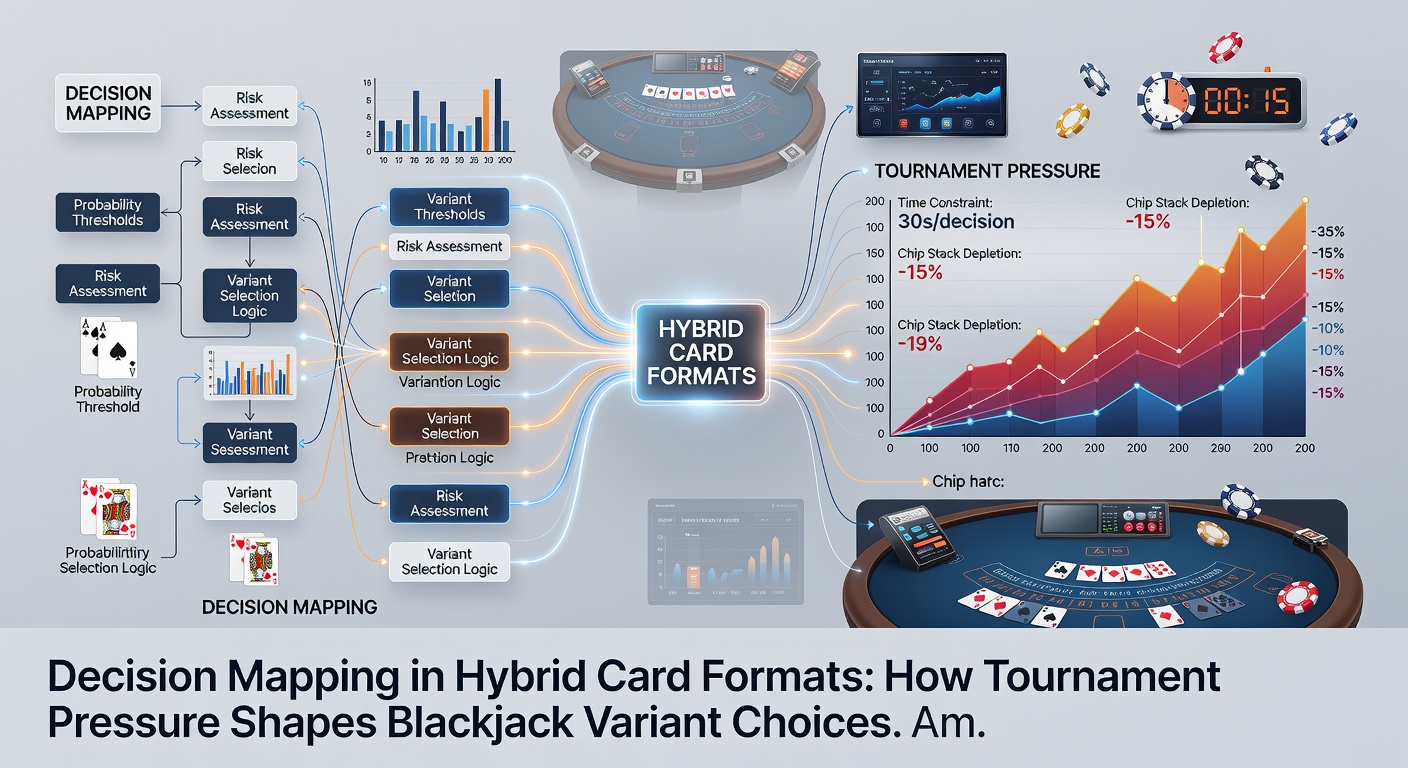
What's notable is the way reward incentives interact with these pressures, as point multipliers tied to specific variants encourage experimentation that standard cash games rarely prompt. According to reports from the Nevada Gaming Control Board, events scheduled around major dates including May 2026 have incorporated updated tracking systems that log variant preferences in real time, revealing patterns where free play credits correlate with broader exploration of hybrid rulesets before paid entries begin. This tracking allows organizers to refine structures based on observed behaviors across thousands of participants annually.
Integration of Reward Incentives and Free Play Options
Reward systems in these formats typically layer cashback percentages, leaderboard bonuses, and milestone credits onto base gameplay, which decision maps must incorporate as conditional branches that alter overall expected values. Studies from European research groups demonstrate that when free play options carry expiration timers or usage restrictions, players accelerate their mapping processes to maximize utilization before constraints activate. Industry data further shows that hybrids blending blackjack with light poker elements benefit most from these incentives because crossover skills from one game type enhance performance in the other under time-limited tournament windows.
Participants often build layered maps that separate cash-equivalent decisions from credit-based ones, and this separation proves useful when tournament rules permit substitution of free play for entry fees in qualifying events. Observers note consistent documentation of improved retention metrics when platforms provide mapping tools alongside these options, as users gain clearer visibility into how incentives compound across multiple rounds.
Conclusion
Decision mapping continues to evolve alongside hybrid card formats as tournament structures refine the balance between risk and opportunity through targeted incentives and accessible free play. Available data from multiple regulatory and academic sources confirms that structured approaches yield measurable differences in how players navigate variant choices when external pressures mount, with patterns expected to shift further around events planned for May 2026 and beyond. Continued analysis of these interactions provides ongoing insight into player behavior across evolving gaming environments.